
Fire safety for landlords, letting agents and HMOs
Smoke alarms, fire alarm systems, emergency lighting and fire doors, installed and serviced for rented property across Hertfordshire, Bedfordshire, Buckinghamshire, Cambridgeshire and north and west London, with every certificate in one place.
- Private landlords, from a single let to a portfolio
- Letting agents and managing agents
- HMO landlords and block managers

Who it’s for
We work with private landlords, from a single buy-to-let to a portfolio, letting agents and managing agents who look after property for several owners, HMO landlords, and block managers responsible for the shared parts of flats. If you’re in our areas, the service is the same: one contact for the fire safety kit, and every certificate where you can find it.
What landlords need: the basics in England
This is a plain-English summary of the general position. What applies to a particular building depends on the property, so always check your licence conditions and fire risk assessment.
Every rented home
Under the Smoke and Carbon Monoxide Alarm (England) Regulations 2015, as amended in 2022, landlords must:
- Fit at least one smoke alarm on every storey used as living accommodation.
- Fit a carbon monoxide alarm in any room with a fixed combustion appliance, such as a gas boiler or log burner. Gas cookers aren’t included.
- Check the alarms are working at the start of each new tenancy, and repair or replace them once told they’re faulty.
HMOs and flats with shared areas
Where people share a building, a fire in one part can affect people elsewhere who don’t know it has started. So HMOs and flats with shared areas usually need:
- A fire detection and alarm system to BS 5839-6, at a grade and coverage that suits the building.
- Emergency lighting on the escape routes, such as stairs and corridors.
- A fire risk assessment for the common parts, kept up to date by the responsible person, usually the landlord, freeholder or managing agent.
- Fire doors in shared areas checked regularly, with closers, seals and gaps kept in order.
Exact requirements vary. For HMOs, the local council (through HMO licensing and housing standards) or a fire risk assessment decides exactly what a property needs. Many councils in London and elsewhere also run additional licensing schemes for smaller HMOs. Our guide do landlords need a fire alarm? explains more.
How often things are tested and serviced
A general guide. Your fire risk assessment, licence or insurer may ask for more.
| What | Who | How often |
|---|---|---|
| Smoke and carbon monoxide alarms | Landlord or agent | Checked working on the first day of each new tenancy. Tenants should test them regularly, and faulty alarms must be repaired or replaced once you’re told. |
| Fire alarm system (HMOs and shared areas) | Responsible person | A quick test every week from a different call point, written in the log book. |
| Fire alarm system (HMOs and shared areas) | Engineer | A full service at least every six months, with a certificate. |
| Emergency lighting | Responsible person or engineer | A short test every month, and a full-duration test (usually three hours) every year. |
| Fire doors in shared areas | Responsible person or engineer | Checked regularly. In blocks over 11 metres, communal fire doors every three months and flat entrance doors once a year. |
| Fire extinguishers | Engineer | Serviced once a year, with a quick visual check in between. |
Where we look after a building, we keep all these dates on file, remind you before each one is due, and line visits up where we can so one trip covers everything. See how often should a fire alarm be serviced? and emergency lighting testing explained for the detail.
What we do for landlords and agents
- Install and service systems to the right grade: fire alarms to BS 5839-6 in HMOs and flats, emergency lighting on escape routes, fire extinguishers and blankets for shared kitchens, and AOVs and smoke vents in stairwells.
- Fire door inspections and repairs: door-by-door fire door checks in shared areas, with photos, and the repairs that follow.
- Door entry: intercoms and fob access for shared front doors, so tenants can let visitors in and lost fobs can be switched off.
- Certificates through the Kerova portal: every certificate and service record for every property, so you or your agent can find them any time.
- Multiple properties: one contact and one schedule across your whole portfolio, with reminders before anything is due.
- Fire risk assessments: Fire risk assessments are arranged through our partner AllServe Pest & Compliance and carried out by an independent fire risk assessor they work with. More about fire risk assessments.
For a new HMO or a change of use, we start from the licence conditions or fire risk assessment and quote for what they ask for. For buildings you already have, we survey what’s there, test it and tell you what needs putting right, including systems another company fitted.
Your certificates
When a council officer, insurer or fire risk assessor asks for the paperwork, you shouldn’t have to dig through emails.
Paperwork before the job is closed
We complete your certificate or service report on site and email it to you before the job is closed, so you can forward it to your landlord, council or insurer straight away.
A QR code on every certificate
Anyone can scan it to see the certificate as it was signed, who signed it and when.
Every property in one portal
Certificates, service records, quotations and reports for every building in your Kerova portal, ready whenever someone asks.
Service reminders
We keep each property’s service dates on file and remind you before they’re due.
Registered portal customers can report faults through their secure Kerova account. If you have not yet been given portal access, please call or email us. Client portal login.
For letting agents and managing agents
If you look after properties for several landlords, we can be your single contact for fire safety across them. Book visits around tenants, get certificates you can pass straight to the landlord, and see what’s due next across every building from the portal. When something goes wrong, tenants or your office can call us any time, day or night. We’ll start with phone and remote support, and arrange for an engineer to come out if it can’t be sorted that way (see how callouts work). Engineer attendance is subject to location and availability. Any applicable charges will be confirmed before an engineer is dispatched.
Get a quote for your properties. Tell us what you have, one house or a whole portfolio, and we’ll come back to you within one working day.
Often booked together: fire alarms for HMOs and flats and fire door inspections.
Guides: Do landlords need a fire alarm?, How often should a fire alarm be serviced?, Emergency lighting testing explained
Your paperwork: We complete your certificate or service report on site and email it to you before the job is closed. It has a QR code to check it’s genuine, and it’s always in your online portal.
Areas we cover
We look after rented property across our areas:
Full coverage across Hertfordshire, Bedfordshire, Buckinghamshire and Cambridgeshire, plus north and west London, Harlow (Essex) and Windsor (Berkshire).
Commercial projects further afield by arrangement. See all the areas we cover.
Some of our work
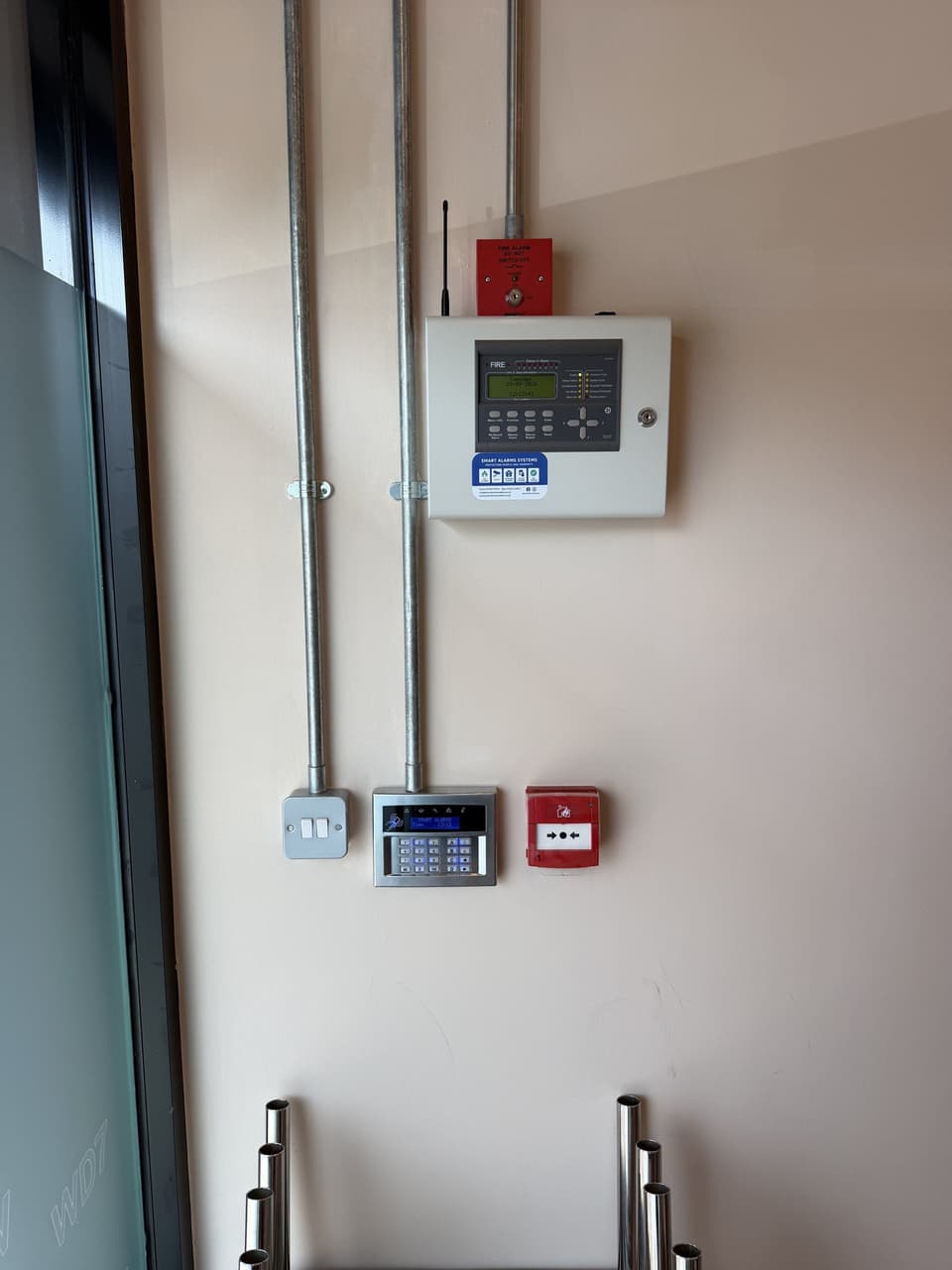
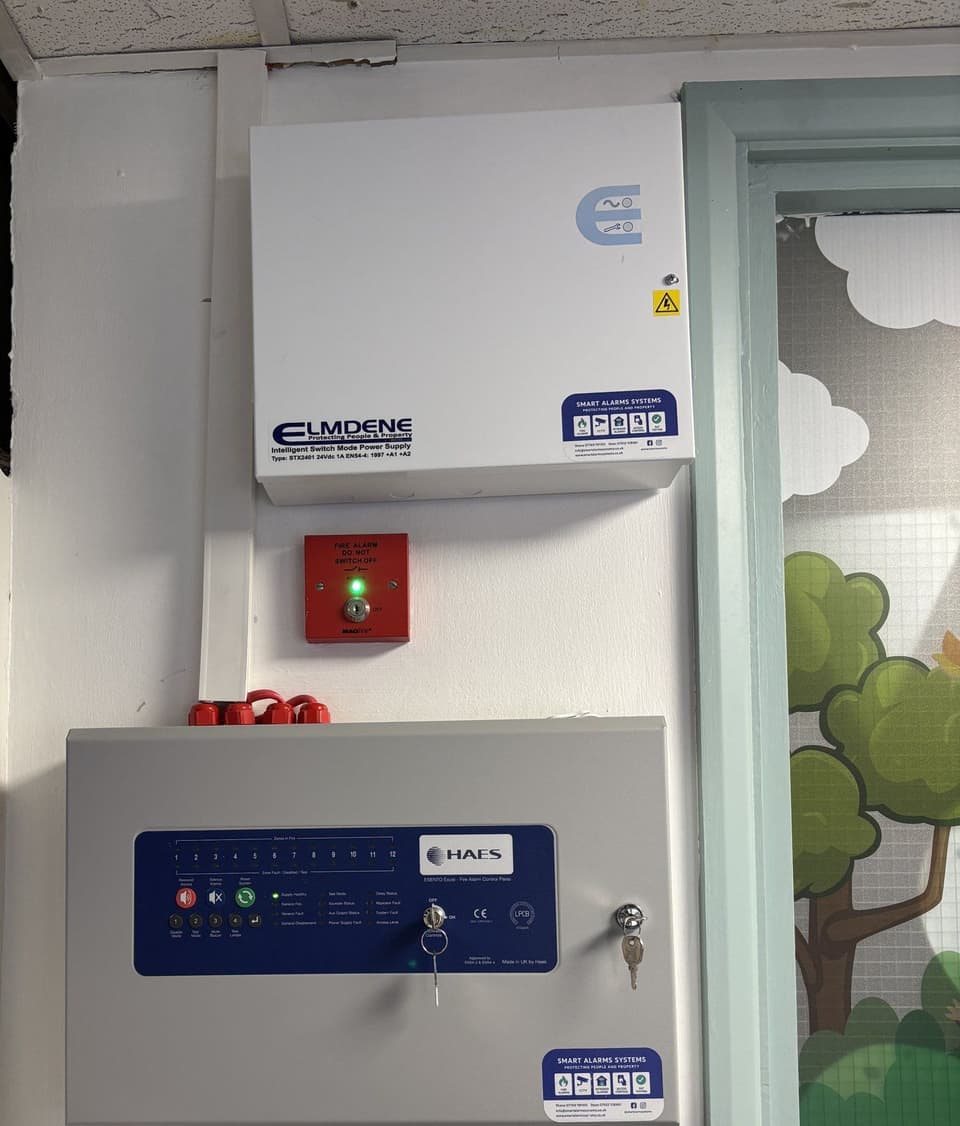
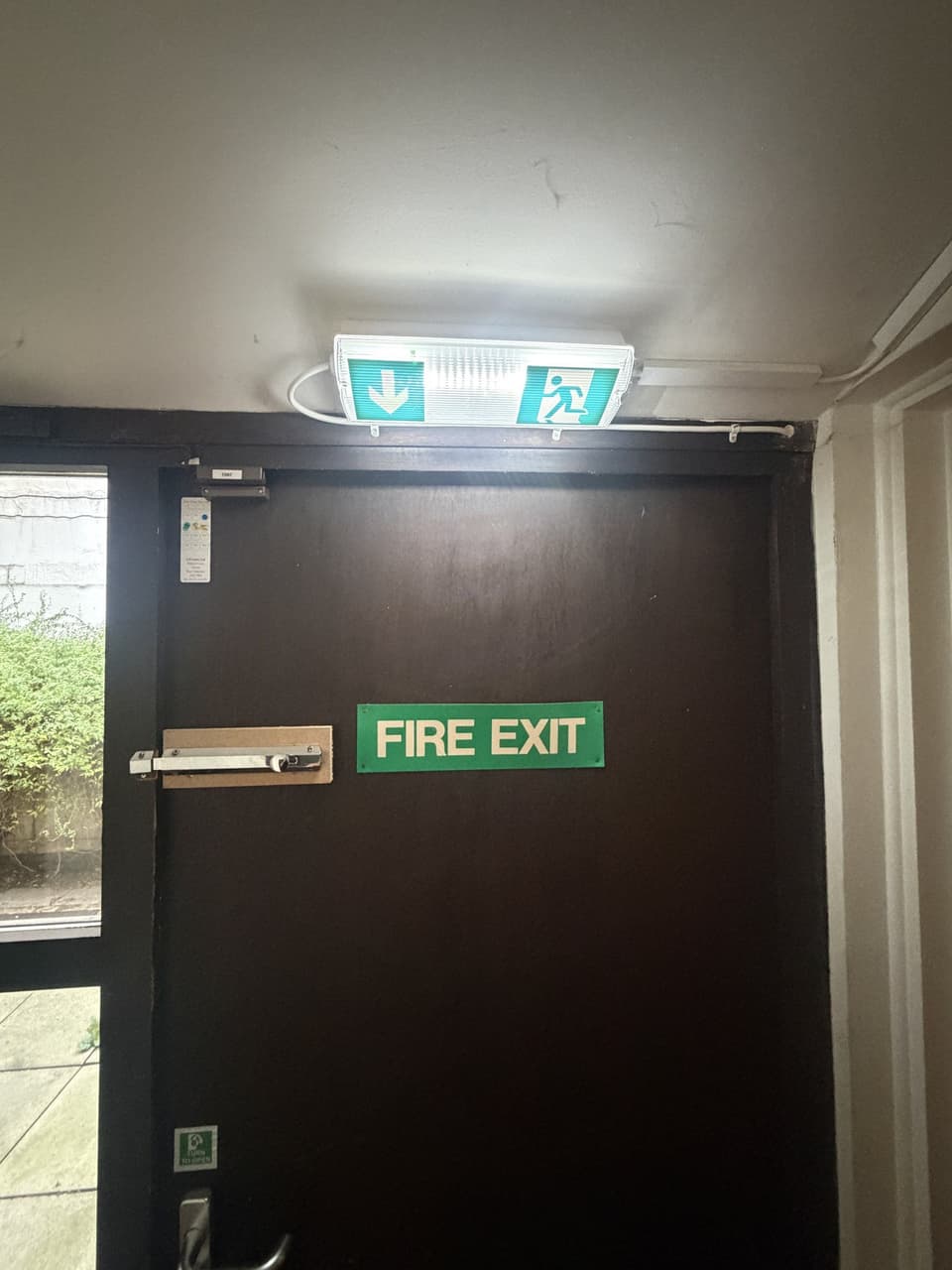
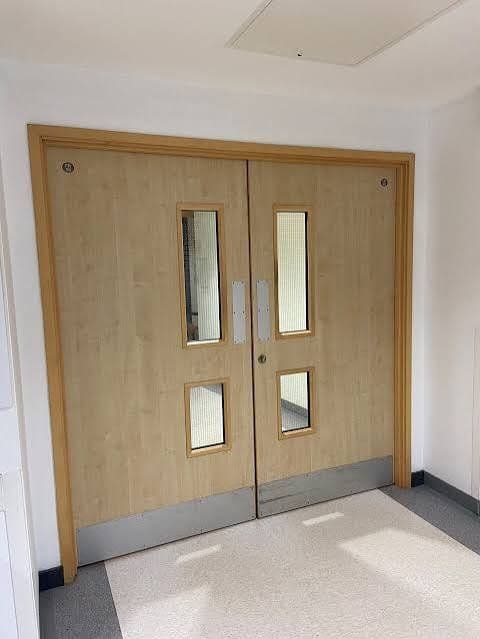


Questions people ask
Do I need a fire alarm in an HMO?
Usually, yes. Most HMOs need more than separate smoke alarms: often interlinked mains-powered alarms throughout, and in larger HMOs a fire alarm system with a control panel. Exactly what you need depends on the size, layout and number of storeys, and the local council or a fire risk assessment decides the exact requirements.
What grade of alarm does my property need?
It depends on the property. Fire alarms in homes and HMOs are graded under BS 5839-6. Smaller HMOs often have Grade D, mains-powered alarms with a backup battery, linked together. Larger HMOs often need Grade A, a panel system with manual call points. How many rooms need detectors (the category, LD1, LD2 or LD3) depends on the layout. We’ll quote for what your council, licence or fire risk assessment asks for.
How often should it be serviced?
A fire alarm system with a panel should be tested weekly by the responsible person and serviced by an engineer at least every six months. Emergency lighting needs a monthly test and a full-duration test once a year. Smoke and carbon monoxide alarms must be checked working at the start of each new tenancy.
Can you look after all my properties?
Yes. Each property gets its own records and service dates, we remind you before anything is due, and where we can we line the visits up so one trip covers everything in a building. Agents and landlords see every property together in the Kerova portal.
Do I get certificates for my records and insurance?
Yes. We complete your certificate or service report on site and email it to you before the job is closed. It has a QR code to check it’s genuine, and it’s kept in your Kerova portal, so you can send it to a council officer, insurer or fire risk assessor whenever they ask.
Can you work around my tenants?
Yes. We arrange access in advance, and most service visits are quick. Tell us how you or your agent prefer to arrange access and we’ll fit in with it.
Want a price?
Call, WhatsApp or send a quick quote request. We’ll come and have a look, and quotes are free.