
Emergency lighting installation and testing in Hertfordshire
If the power goes off during a fire, people still need to see their way out. Emergency lights and exit signs come on by themselves when the mains fails. We fit them, test them and keep the records.
- Offices, shops, warehouses, schools and nurseries
- Stairwells and corridors in blocks of flats
- HMOs and other rented property

What the job involves
We start by working out where emergency lighting is needed. That means every escape route and stairway, changes of direction and floor level, every final exit, and near fire-fighting equipment and fire alarm call points, plus any rooms or areas your fire risk assessment highlights. Exit signs go where people need to be pointed towards the way out.
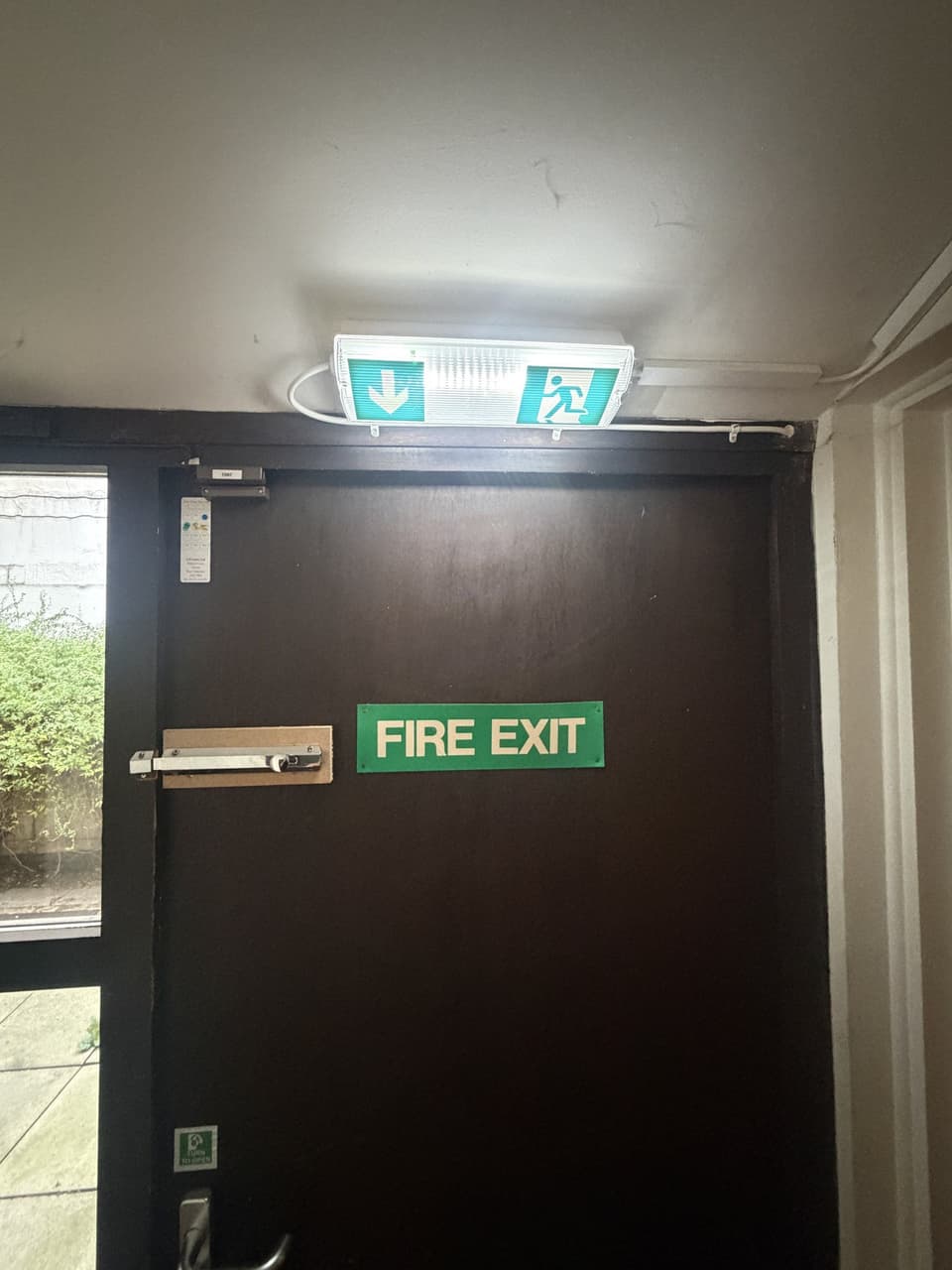
Then we install the fittings and signs, usually wired into the local lighting circuit so they know when the power has failed, fit a test key switch so the monthly test is easy, and test every fitting. In bigger buildings or warehouses we can fit self-testing lights that run their own checks.
Already have emergency lighting? We can survey it against your fire risk assessment, test it, and tell you whether anything is missing or failing before quoting for the fix.
Landlord, letting agent or block manager? Emergency lighting on the escape routes is usually needed in HMOs and the shared parts of flats. See fire safety for landlords and HMOs.
Types of emergency lighting
There are a few kinds of fitting, and most buildings use a mix:
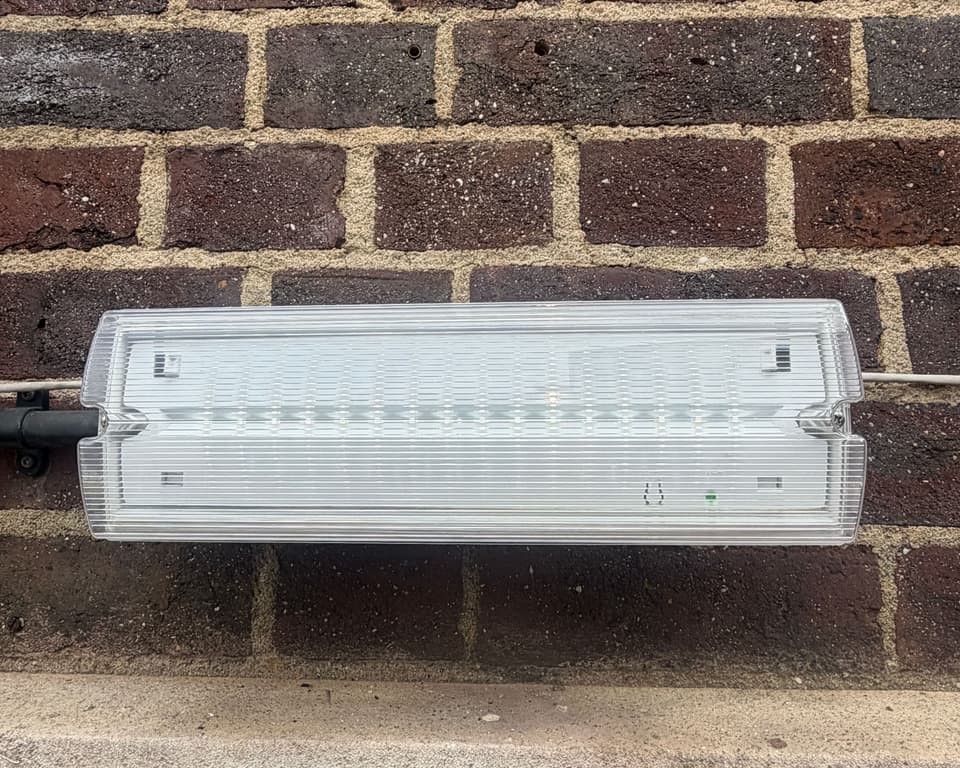
- Bulkheads and downlights: light escape routes, stairs and open areas when the power fails.
- Exit signs: show the way out, often lit all the time (maintained).
- Twin-spot units: throw light over a large area such as a warehouse floor.
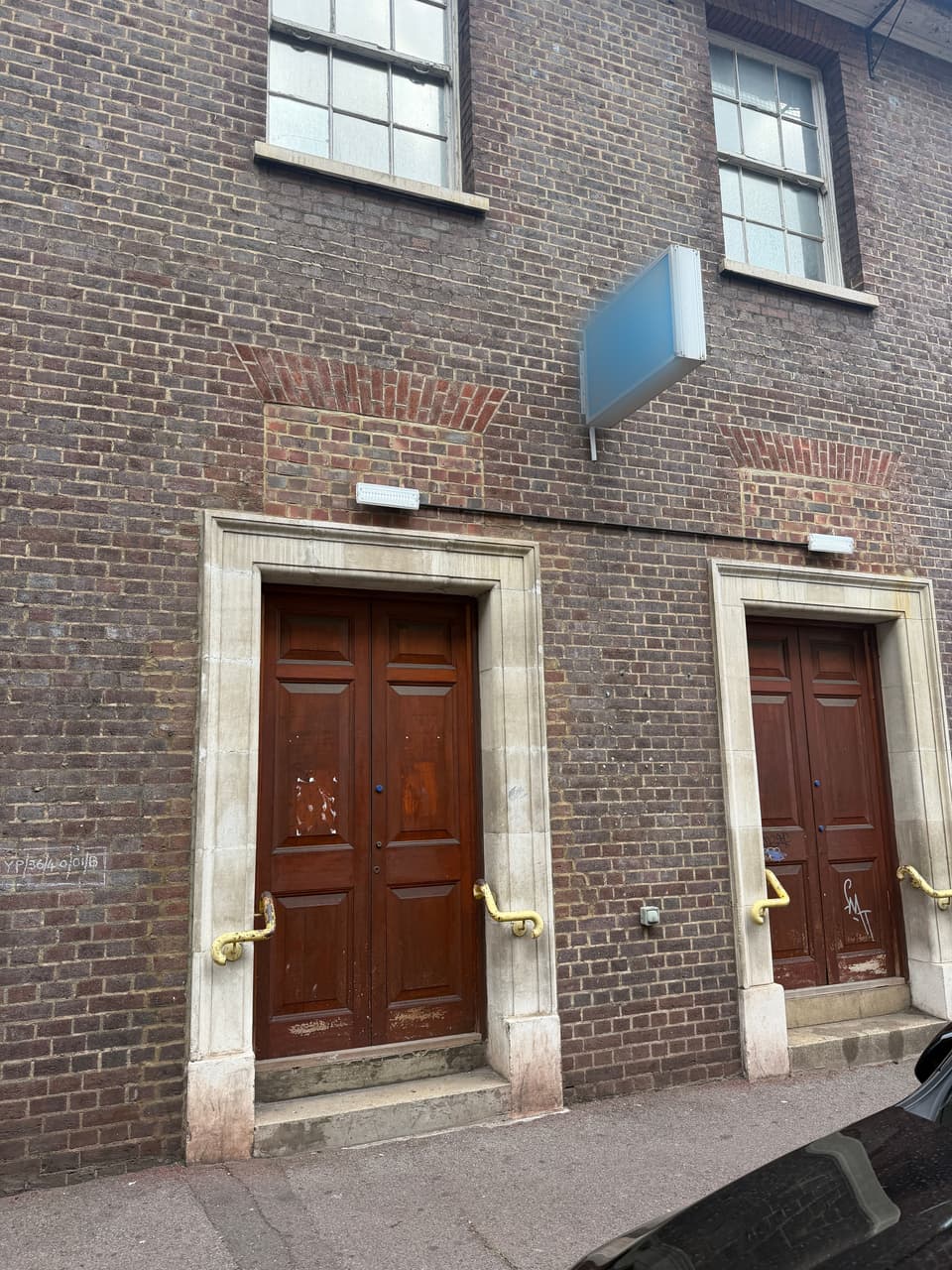
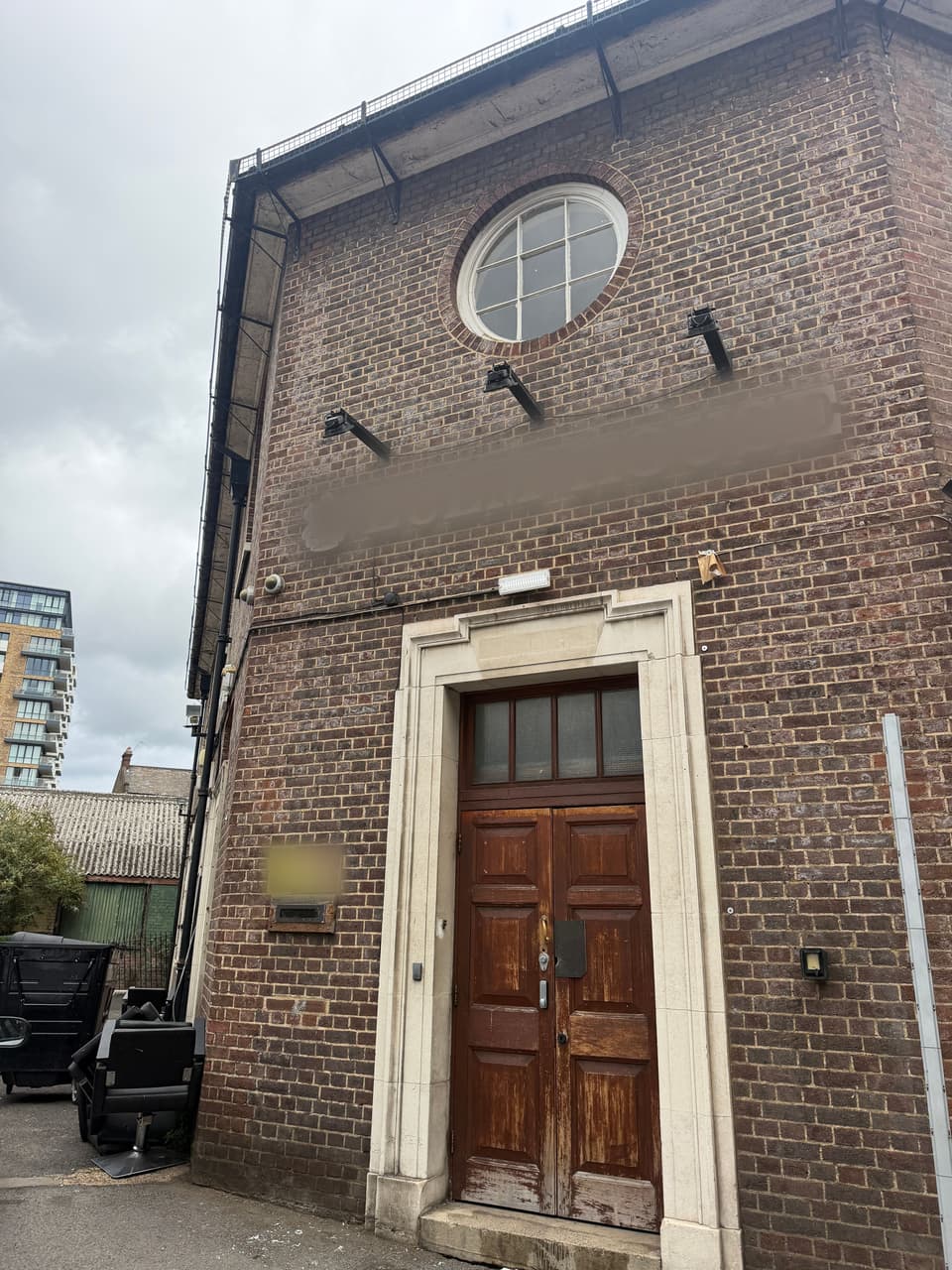
- External lights: light the area outside final exits so people can move safely away from the building.
Most fittings have a battery inside that lasts for three hours, which is the usual requirement for buildings people may stay in or return to.
What you get
- Emergency lights and exit signs where they’re needed, and not where they aren’t.
- Maintained or non-maintained fittings, chosen to suit each area.
- A test key switch and a log book, with a walk-through of the monthly test.
- We complete your certificate or service report on site and email it to you before the job is closed. Each one has a QR code to check it’s genuine, and they’re all in your online portal.
Emergency lighting is designed, installed and tested to BS 5266-1.
How servicing works
Batteries in emergency lights slowly lose capacity, so regular testing really matters. BS 5266-1 asks for two kinds of test:
- Every month: a short function test to check every light and sign comes on when the mains is switched off. You can do this yourself in a few minutes.
- Once a year: a full-duration test, where the lights run on battery for their full rated time, usually three hours. We do this for you, ideally when the building is quiet, because the batteries need time to recharge afterwards.
We record the results, replace failed batteries or fittings and retest, and remind you before the next annual test is due. Our guide emergency lighting testing explained covers it step by step. Emergency lighting is often looked after alongside the fire alarm and extinguishers on one visit.
Often booked together: fire alarm installation and servicing and fire extinguisher servicing.
Guide: Emergency lighting testing explained
Your paperwork: We complete your certificate or service report on site and email it to you before the job is closed. It has a QR code to check it’s genuine, and it’s always in your online portal.
Areas we cover
We install and test emergency lighting across our main areas, and have travelled as far as Andover for this work:
Full coverage across Hertfordshire, Bedfordshire, Buckinghamshire and Cambridgeshire, plus north and west London, Harlow (Essex) and Windsor (Berkshire).
Commercial projects further afield by arrangement. See all the areas we cover.
Some of our work
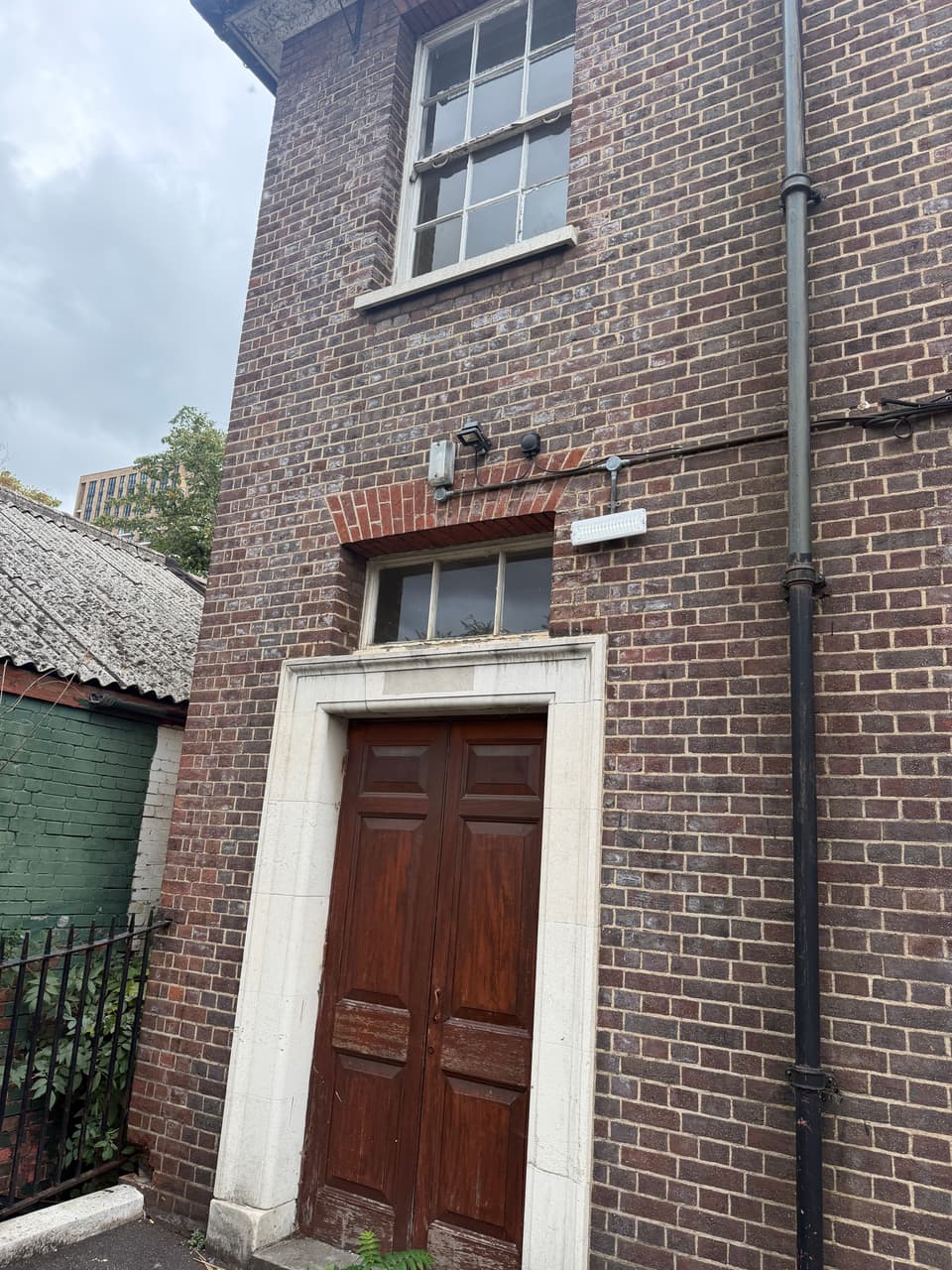


Questions people ask
How often does emergency lighting need testing?
Under BS 5266-1, a short function test every month, and a full-duration test once a year, where the lights have to stay on for their full rated time, usually three hours.
Can I do the monthly test myself?
Yes. It’s usually a quick check using a test key switch, and you note the result in the log book. We can show you how, and do the annual test for you.
What’s the difference between maintained and non-maintained?
Maintained lights are on all the time and stay on when the power fails, which is common for exit signs in places like halls. Non-maintained lights only come on when the power fails.
Our lights failed the test. What now?
Usually it’s the battery, which wears out after a few years. We replace batteries or fittings as needed and retest.
Do you install self-testing emergency lights?
Yes. Self-testing fittings run their own tests and show a coloured light or report if something fails. They save time, but someone still needs to check the results and keep the log book up to date.
Want a price?
Call, WhatsApp or send a quick quote request. We’ll come and have a look, and quotes are free.