
Fire alarm installation and servicing in Hertfordshire
If you run a business, manage a building or let property, a working fire alarm is one of the first things your fire risk assessment will look at. We install new systems and keep existing ones working and properly recorded.
- Offices, shops, schools and nurseries
- Blocks of flats, HMOs and communal areas
- Homes that need mains-wired, linked smoke and heat alarms

What the job involves
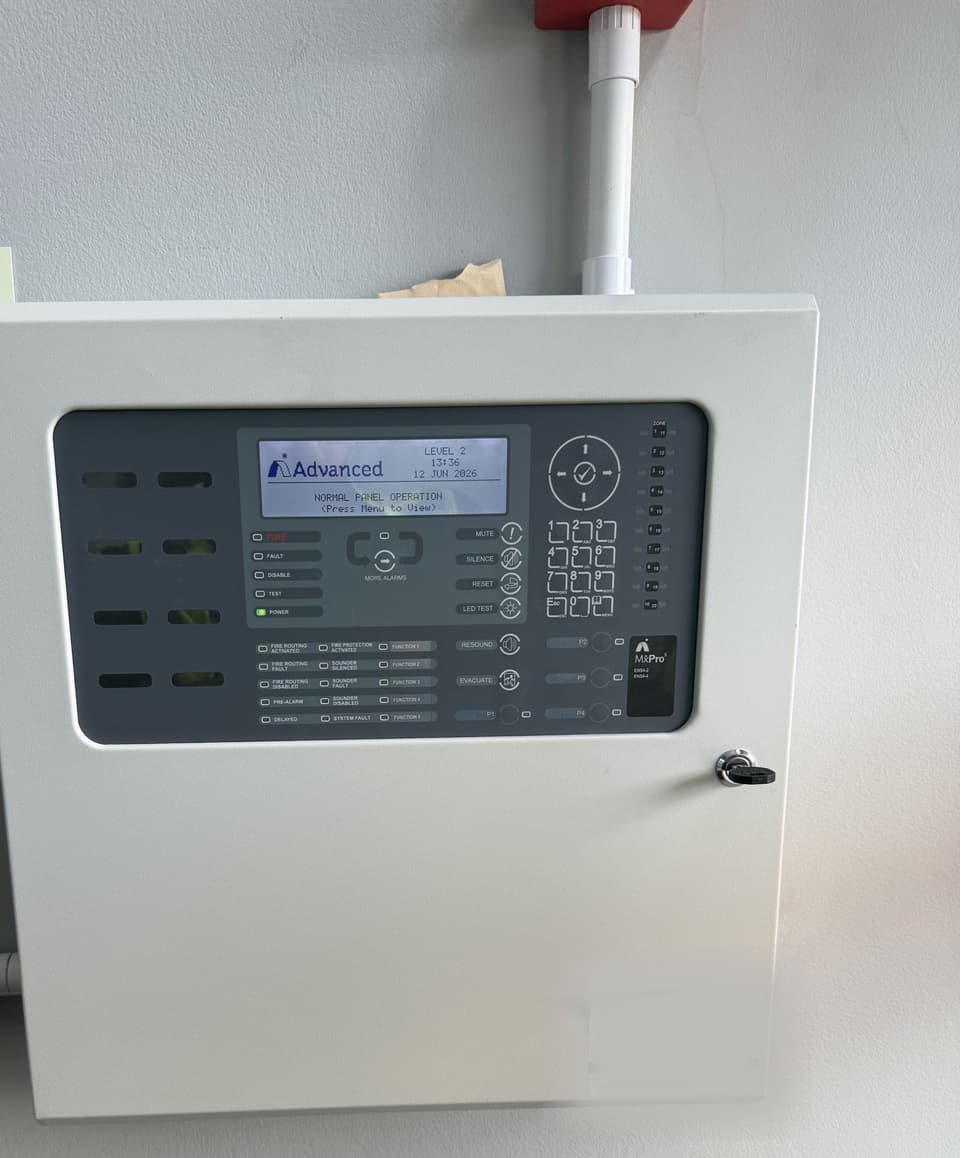
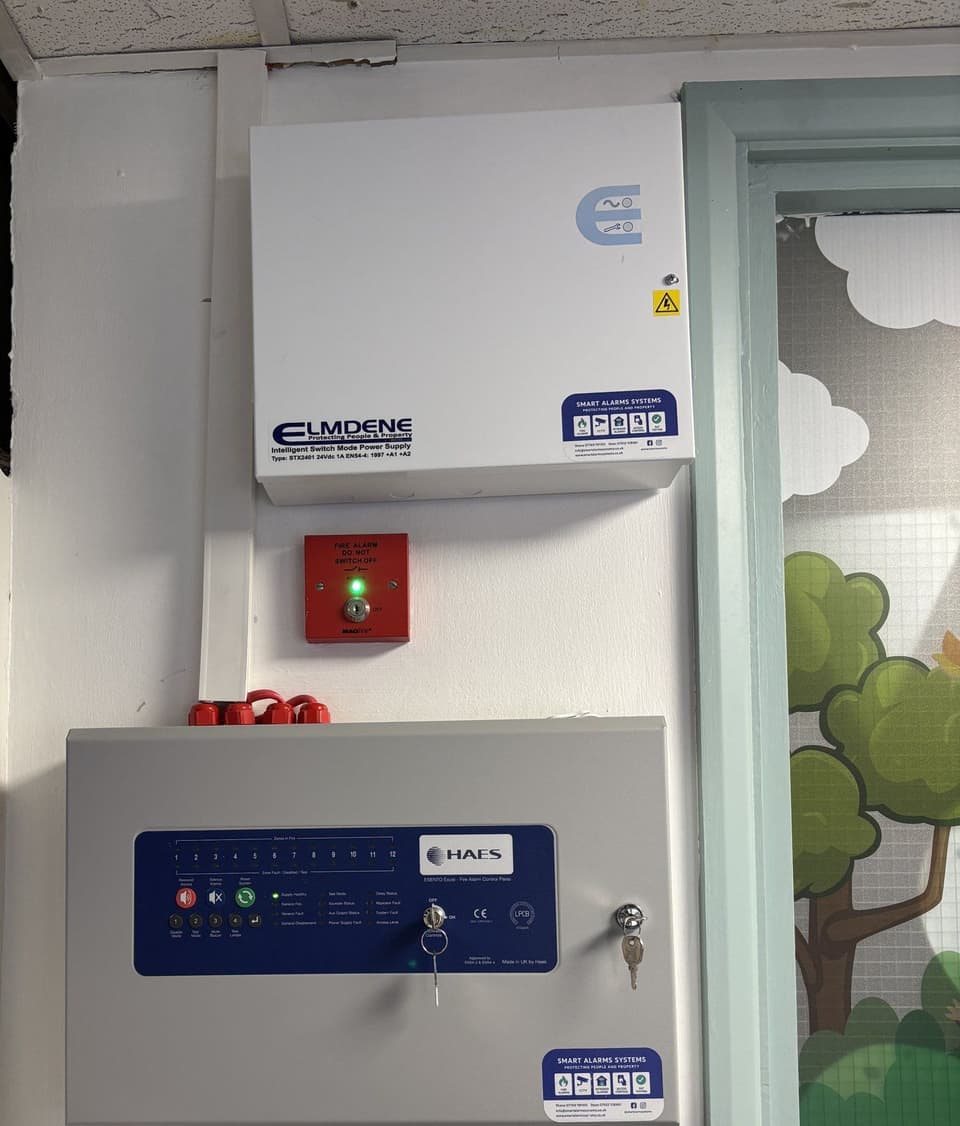
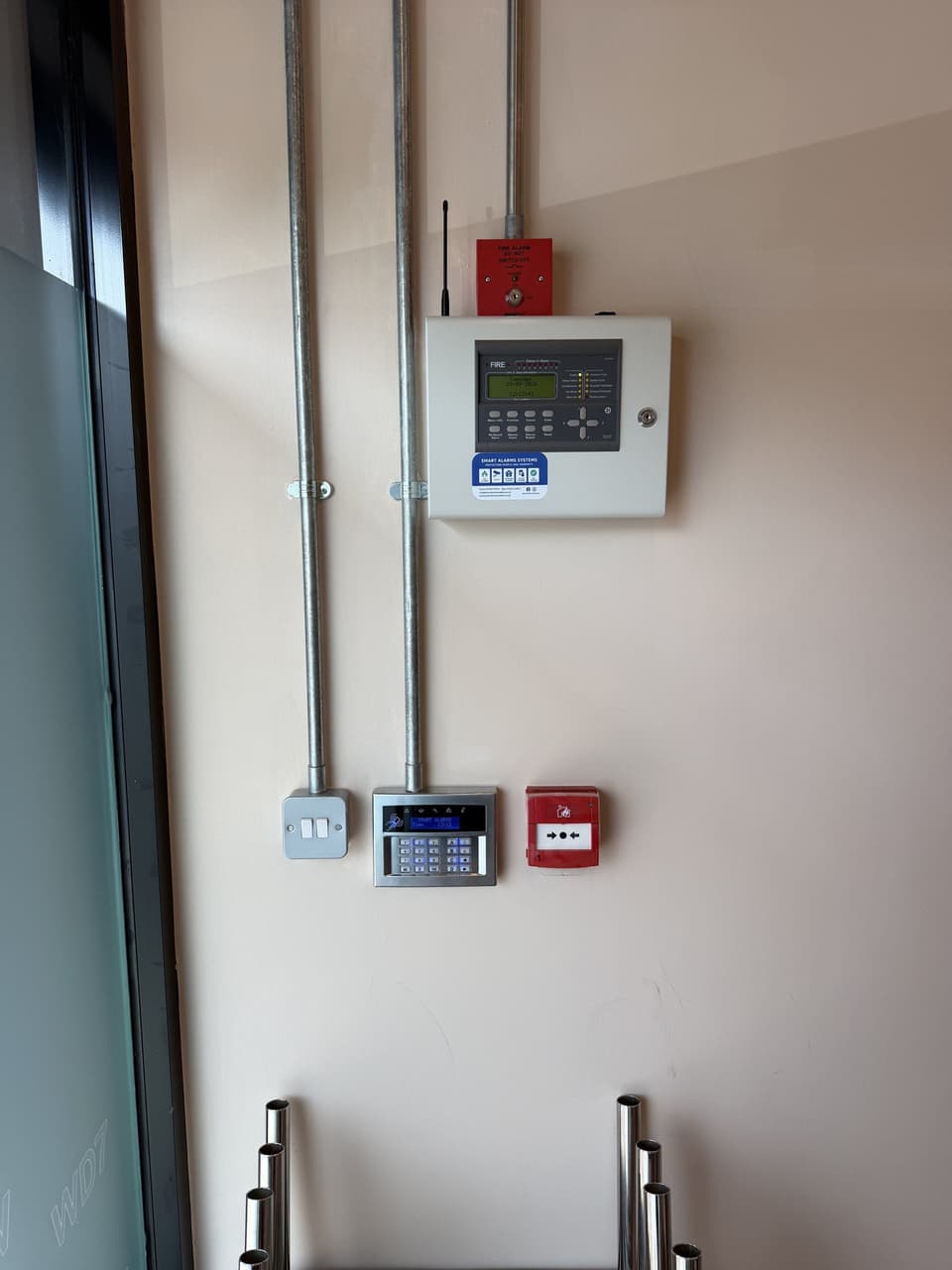
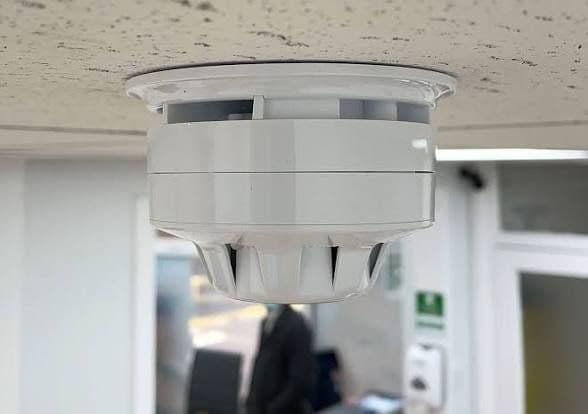
We design, install, commission and service fire alarm systems, from a small conventional panel in a shop to an addressable system across several floors. A system is made up of the control panel, smoke and heat detectors, manual call points (the red “break glass” boxes), and sounders and flashing beacons so everyone knows to get out.
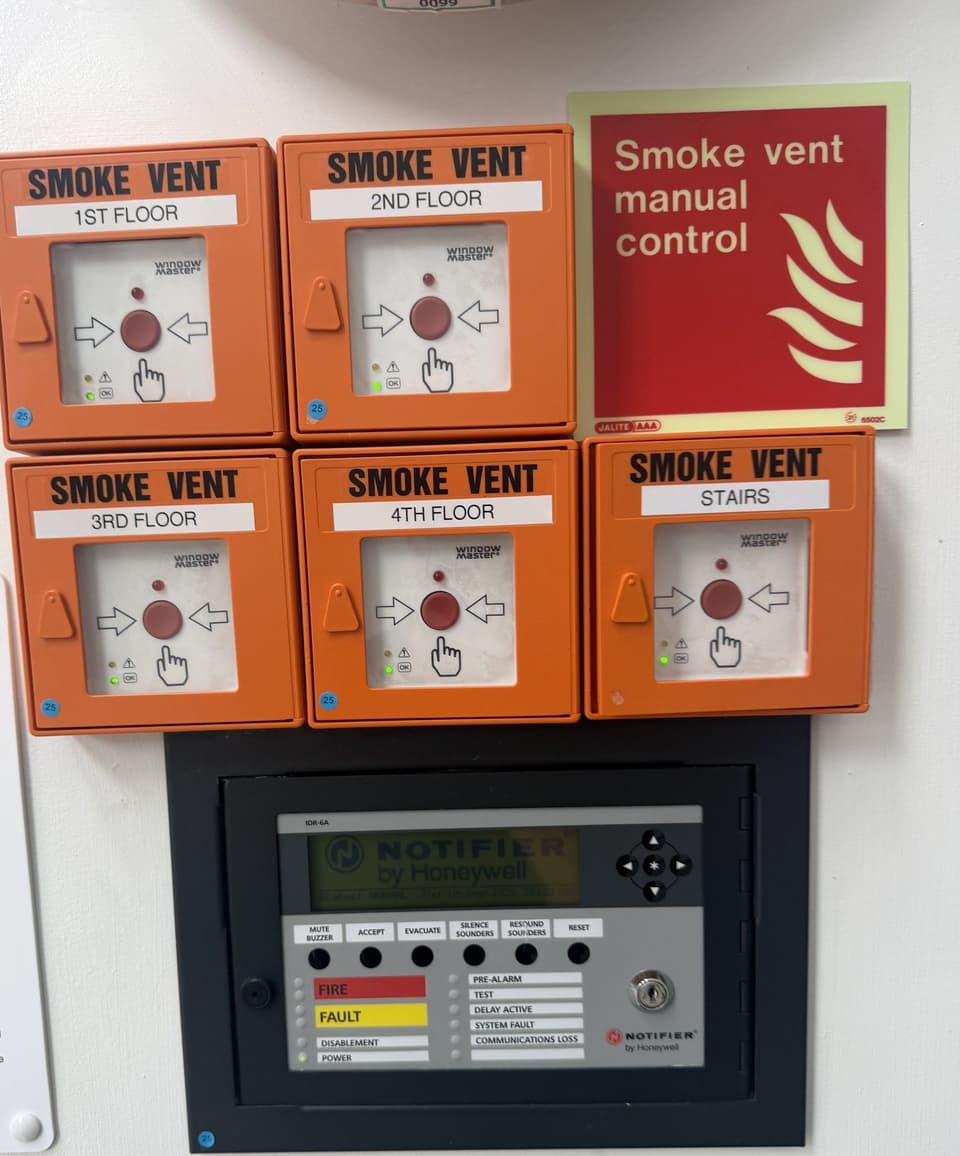
The job starts with your building and your fire risk assessment. We look at the layout, how the building is used, who’s in it and when, and what the assessment asks for. Then we design the system: what type of detector goes in each room, where the call points go on the escape routes, and whether the alarm needs to do anything else, such as release magnetic door holders or open automatic smoke vents on the stairs.
We install it with fire-rated cable, commission it, test every device and hand over the log book and zone plan, so you and the fire service can see at a glance where an alarm has come from.
Fire alarms at home
For homes, we fit mains-powered smoke and heat alarms that are linked together, so if one goes off they all do. A heat alarm goes in the kitchen, where smoke alarms would go off every time someone made toast, and smoke alarms go in the hall, landing and living areas. Linked alarms give much better warning than separate battery alarms, especially in houses on more than one floor.
Letting a property or running an HMO? See fire safety for landlords, letting agents and HMOs, including which alarm grade a rented property usually needs and how often it should be tested.
What you get
- A system designed for your building and your fire risk assessment.
- Conventional or addressable panels, chosen to suit the size of the building.
- A zone plan next to the panel, a log book, and a walk-through on silencing, resetting and the weekly test.
- We complete your certificate or service report on site and email it to you before the job is closed. It has a QR code anyone can scan to check it’s genuine.
- Every certificate kept in your online portal, ready for your insurer, landlord or fire risk assessor.
Fire alarm systems in non-domestic buildings are designed, installed and maintained to BS 5839-1. It’s what fire risk assessors, insurers and the fire service expect.
How servicing works
BS 5839-1 recommends a service at least every six months. On each visit we look through the log book and the panel’s event history, check the panel, batteries and charger, and test detectors, call points, sounders and beacons, working through the whole system over the year. We also check whether anything in the building has changed, such as new walls, a change of use or covered detectors, that could stop the system working properly.
Between visits, someone on site should test the alarm every week from a different call point and note it in the log book. We’ll show you how. Read our guide how often should a fire alarm be serviced? for more detail, and see emergency lighting and fire extinguishers, which are usually serviced at the same time.
Often booked together: emergency lighting installation and testing and fire extinguisher servicing.
Guides: Do landlords need a fire alarm?, How often should a fire alarm be serviced?
Your paperwork: We complete your certificate or service report on site and email it to you before the job is closed. It has a QR code to check it’s genuine, and it’s always in your online portal.
Areas we cover
Recent fire alarm work includes panels in Hemel Hempstead and Peterborough. Our main areas are:
Full coverage across Hertfordshire, Bedfordshire, Buckinghamshire and Cambridgeshire, plus north and west London, Harlow (Essex) and Windsor (Berkshire).
Commercial projects further afield by arrangement. See all the areas we cover.
Some of our work


Questions people ask
How often should a fire alarm be serviced?
BS 5839-1 recommends a service at least every six months for systems in non-domestic buildings. You should also test it yourself every week, using a different call point each time, and write it in the log book.
What’s the difference between a conventional and an addressable system?
A conventional system tells you which zone a fire is in. An addressable system tells you exactly which detector or call point has gone off. Smaller buildings often suit conventional; larger or more complicated buildings usually suit addressable.
My fire risk assessment says I need a fire alarm. Where do I start?
Send us the assessment or tell us what it says. We’ll survey the building and quote for a system that matches what the assessor has asked for.
Can you take over servicing from another company?
Yes. We’ll check the system over, record what we find and tell you about anything that needs putting right.
The panel is showing a fault. What should I do?
Don’t ignore it. A fault can mean part of the building isn’t protected. Call or WhatsApp us, or call us any time, day or night. We’ll start with phone and remote support, and if it can’t be sorted that way we’ll arrange for an engineer to come out, whether or not you have a service agreement with us. Engineer attendance is subject to location and availability. Any applicable charges will be confirmed before an engineer is dispatched.
Want a price?
Call, WhatsApp or send a quick quote request. We’ll come and have a look, and quotes are free.